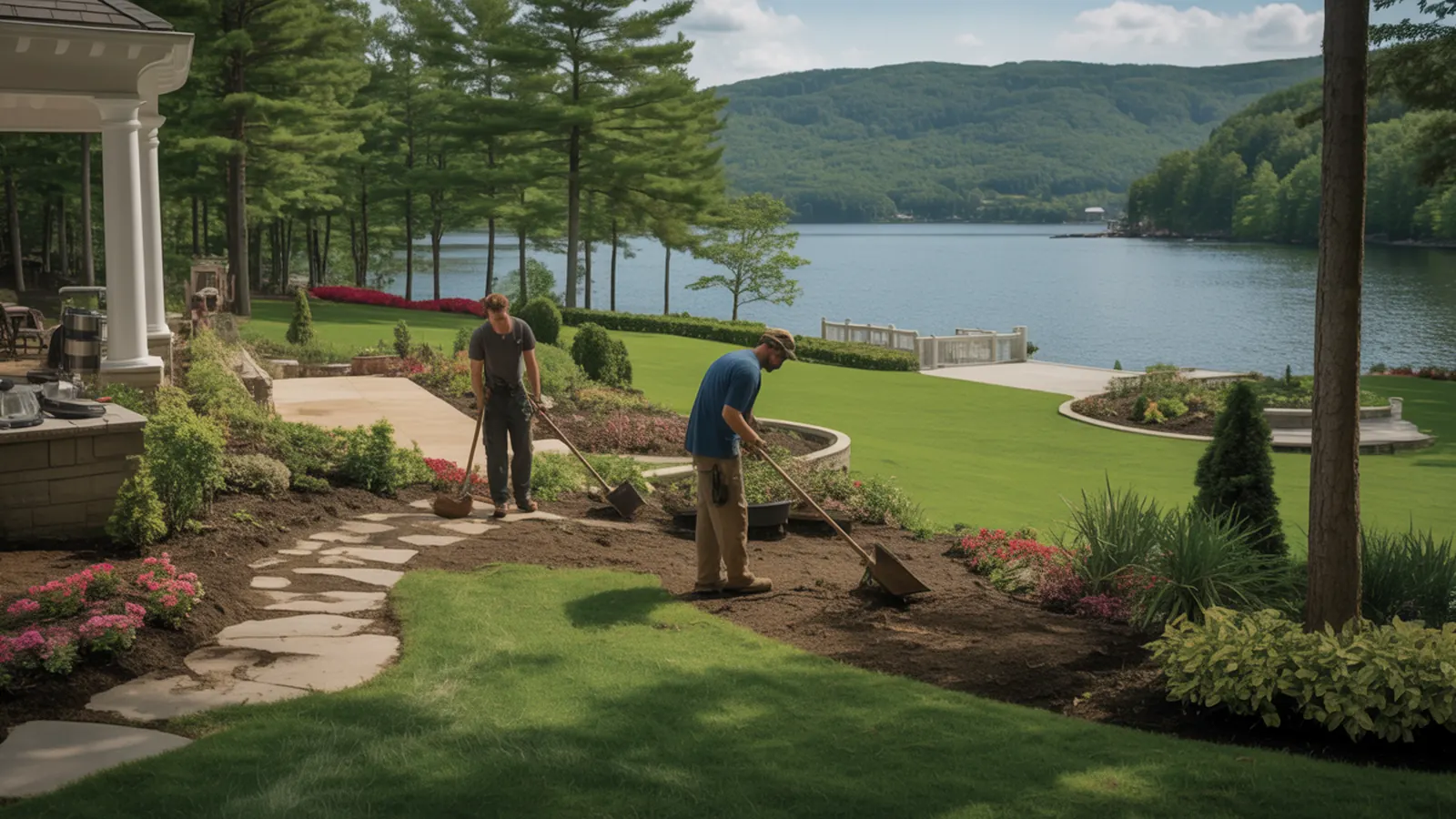
Most lake lots at Deep Creek drop toward the water, and the trip from the driveway to the dock is often the most used path on the property. Landscaping here is less about manicured flower beds and more about making a steep, wooded site safe, usable and good-looking for guests and family.
A well-planned outdoor space also earns its keep for rentals. Listings with a fire pit overlooking the lake, a level lawn for games or a lit stone path down to the dock tend to stand out in photos. Those upgrades last for decades when they are built with proper drainage and base material.
Through Deep Creek Hub, your project details go to up to three local landscaping contractors who serve your area. You compare designs, timelines and price before you commit.
Designing for mountain lake lots
Slope and water are the two forces every Deep Creek landscaper has to manage. Heavy rains send runoff down hillsides, carrying soil and mulch toward the lake and undermining walkways. Terracing with retaining walls, stone steps set on compacted base, dry creek beds and native plantings with deep roots all help hold the ground in place.
Work near the shoreline can involve rules about buffers, disturbance and permits, and lakefront owners may need approvals before cutting trees or building close to the water. An experienced local contractor will know when permits are likely needed and will build that time into the schedule rather than discovering it halfway through a project.
Wildlife shapes the plant list. Deer browse hostas, arborvitae and many popular ornamentals right down to the stems, so local designers lean on natives and deer-resistant choices such as ferns, mountain laurel, spirea and ornamental grasses. Plants also need to handle a shorter growing season and winter lows well below zero.
Snow matters in the design phase as well. Plows and shovels need somewhere to push snow, so beds and low walls placed right at the edge of a driveway often get scraped every winter. Steps and paths should be laid out so they can be cleared easily and do not funnel meltwater into a spot that refreezes overnight. Lighting fixtures, edging and boulders all need to sit where a plow blade will not catch them. Thinking through winter use up front saves repair bills every spring.
- Ask early about shoreline permits for work near the water.
- Choose deer-resistant and native plants suited to cold winters.
- Plan drainage first so new patios and paths do not wash out.
Landscaping projects you can request
Hardscaping
Stone and paver patios, steps to the dock, walkways and fire pit areas.
Retaining walls and terraces
Block or natural stone walls that create level space on steep lots.
Erosion and drainage control
Dry creek beds, French drains, regrading and stabilizing banks.
Planting design
Native, deer-resistant beds and screening plantings for privacy.
Landscape lighting
Low-voltage path, step and accent lighting for safe nighttime walks.
Tree and brush work
Clearing overgrowth, view pruning and removing hazard trees with permits where required.
When to plan and build
Landscape contractors in Garrett County fill their calendars quickly once the ground thaws. Design conversations in winter put you in line for a spring or early summer build. Late summer and fall are also excellent for hardscaping and planting, with cooler weather and fewer guests on site.
Frozen ground generally halts excavation and planting from about December through March, so plan major projects around that window.
- January to March
- Design, quotes and permit applications.
- April to June
- Spring builds and planting once the ground thaws.
- July to August
- Busy rental season; smaller projects and maintenance.
- September to November
- Prime window for hardscaping and fall planting.
Typical landscaping price ranges
Estimates only · actual prices vary by property
Landscaping prices vary more than most services. These ranges are only a general starting point; slope, access and materials drive real numbers.
| Job | Typical estimate range |
|---|---|
| Planting bed refresh | $500 to $3,000 |
| Stone or paver patio | $15 to $40+ per sq ft |
| Fire pit area | $2,000 to $8,000+ |
| Retaining wall | $40 to $120+ per face sq ft |
| Stone steps to the dock | $3,000 to $15,000+ |
Estimates vary by property and provider. Ask for a site visit and a written scope before comparing totals.
What to ask a landscaper
These questions help you separate experienced lake contractors from general yard crews.
- Have you built on steep lakefront lots before? Can I see examples?
- Will this project need shoreline or grading permits?
- How will you handle drainage and erosion?
- Which plants do you recommend for deer and cold winters?
- What base material and depth will you use under patios and steps?
- Is there a warranty on plants and hardscape work?
- Can you schedule work around my rental bookings?
Landscaping FAQ
Do I need a permit for landscaping near Deep Creek Lake?
Work near the shoreline, tree removal or significant grading may require approvals. Ask your contractor to confirm before work starts.
What plants do deer leave alone at Deep Creek?
No plant is fully deer-proof, but ferns, mountain laurel, spirea, ornamental grasses and many natives hold up better than hostas or arborvitae.
When is the best time to build a patio?
Spring after the thaw and early fall are ideal. Fall often offers better scheduling and fewer guests on site.
How can I stop erosion on my slope?
Terracing, deep-rooted plantings, dry creek beds and proper drainage all help. A landscaper can recommend the right combination.
How many landscaping quotes will I receive?
Your project is shared with up to three local landscaping providers.