Deep Creek homes sit in the woods, often next to water, and many are empty for days or weeks at a time. To a mouse looking for a warm place in October, an unoccupied cabin with a gap under the deck door is an open invitation. To paper wasps, the eaves of a quiet lake house are prime real estate.
For rental owners, pests are also a reputation issue. One review that mentions mouse droppings in a kitchen drawer or a wasp nest by the hot tub can cost bookings for months. Prevention is almost always cheaper than recovery.
Deep Creek Hub sends your request to up to three local pest control providers who serve your area so you can compare treatment plans and pricing.
The pests lake owners deal with most
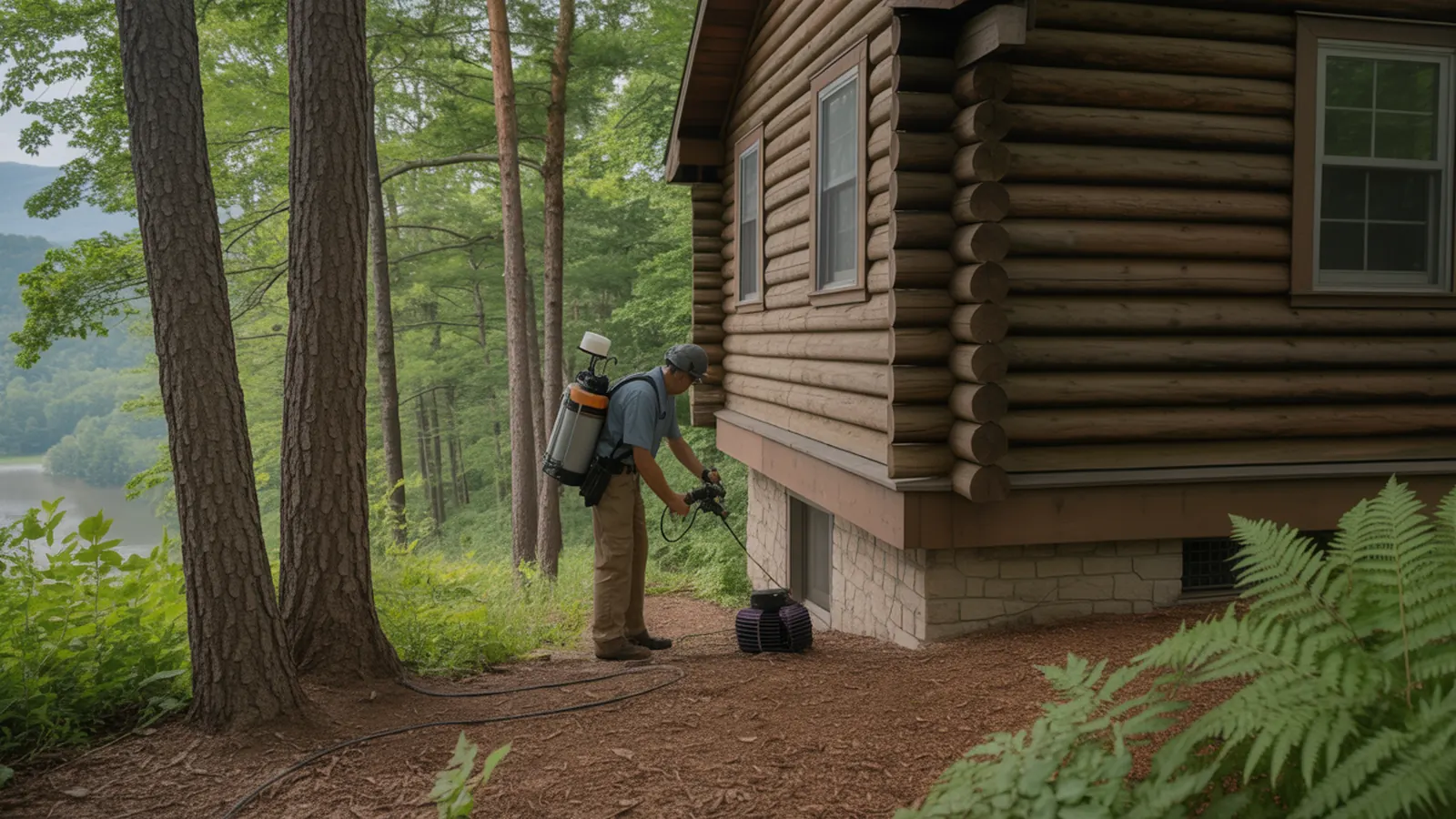
Mice are the classic fall problem. As temperatures drop they move indoors through tiny gaps around plumbing, vents, garage doors and log or stone siding. Sealing those openings, known as exclusion, combined with monitoring traps or bait stations, is usually more effective than baiting alone. A good technician will walk the foundation and crawlspace and show you where they are getting in.
Stinging insects peak in late summer. Yellow jackets nest in the ground near lawns and paths, paper wasps build under deck railings and eaves, and bald-faced hornets hang large nests in trees near the house. Around docks, play areas and hot tubs, removal is a safety measure for guests.
Wood-destroying insects matter too. Carpenter ants are drawn to damp wood around decks, docks and leaky roofs, and termites can show up in older homes. Fall also brings stink bugs and lady beetles that cluster on sunny walls and slip inside, an annoyance more than a threat but something guests notice.
Vacancy makes everything harder to spot. In a full-time home, someone notices droppings under the sink or a trail of ants on the counter within a day. At a second home, a problem can grow for weeks before anyone walks in. That is why many owners ask their cleaner or property manager to check traps and look for signs of activity during each visit, and pair that with a professional inspection in the fall. Chewed wiring, contaminated insulation and nests in the attic or crawlspace are far more expensive to fix than a few sealed gaps and a seasonal treatment plan.
- Store firewood away from the house and off the ground.
- Seal food in rental pantries and keep trash in lidded bins.
- Ask for an exclusion inspection before the first cold nights.
Pest control services available
Rodent exclusion
Sealing entry points, crawlspace inspection, trapping and cleanup recommendations.
Stinging insect removal
Yellow jacket, wasp and hornet nest treatment around decks, docks and yards.
Ant and termite treatments
Carpenter ant control, termite inspections and wood-destroying insect reports.
Quarterly prevention plans
Regular exterior treatments and inspections timed to seasonal activity.
Occasional invaders
Stink bugs, lady beetles, cluster flies and spiders around windows and siding.
Tick and mosquito reduction
Yard treatments for areas where guests and pets spend time outdoors.
Pest season at Deep Creek
Pest pressure follows the weather. Stinging insects build through summer and are most aggressive in August and September. Rodents start looking for shelter in late September and October. Booking exclusion before that shift keeps them from settling in for the winter.
Many owners choose a quarterly plan so treatments happen at the right times without having to remember to call.
- March to May
- Ant activity rises; termite swarms possible on warm days.
- June to September
- Stinging insect season; ticks and mosquitoes active.
- September to November
- Best time for rodent exclusion and fall invader treatments.
- December to February
- Monitor traps in vacant homes and fix any new entry points.
Typical pest control price ranges
Estimates only · actual prices vary by property
These ranges are rough guidance. Home size, severity and the amount of sealing work needed all affect quotes.
| Job | Typical estimate range |
|---|---|
| One-time general treatment | $150 to $350 |
| Wasp or hornet nest removal | $100 to $400 |
| Rodent exclusion and trapping | $300 to $1,500+ |
| Quarterly prevention plan | $100 to $200 per visit |
| Termite treatment | $800 to $3,000+ |
Estimates vary by property and provider. Ask whether follow-up visits are included.
What to ask a pest control provider
Use this list to compare providers and treatment approaches.
- Are you licensed by the Maryland Department of Agriculture?
- Will you seal entry points or only set bait?
- Which products do you use near the lake, pets and play areas?
- Are follow-up visits included if the problem returns?
- Can you schedule treatments between guest stays?
- Do you provide a written inspection report?
- What does a quarterly plan include?
Pest Control FAQ
Why do mice get into lake houses in the fall?
They look for warm shelter as nights cool, and vacant homes with small gaps around pipes, vents and doors are easy targets.
Is pest control safe near the lake?
Ask providers which products they use near water, pets and children. Many use targeted treatments and exclusion to limit chemical use.
When should I book rodent exclusion?
Late September through October, before rodents settle in for winter.
Can treatments be scheduled around guests?
Most providers can work on turnover days. Mention your rental calendar when requesting quotes.
How many pest control quotes will I get?
Your request goes to up to three local pest control providers.