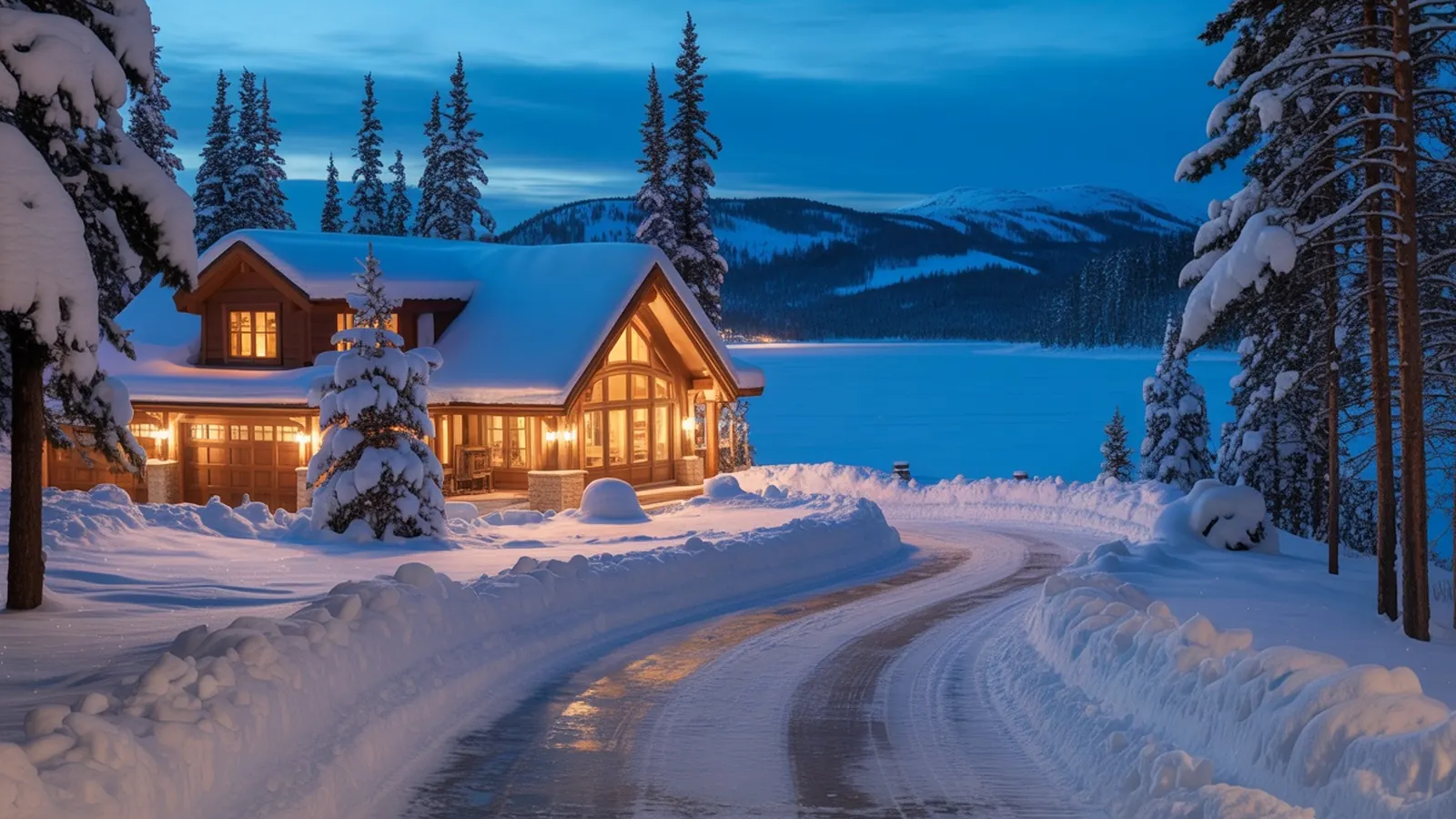
Garrett County gets real winters. Storms can drop significant snow in a single night, and lake-effect and upslope snow can keep the flakes coming for days. Around Deep Creek Lake, many homes sit on steep, curving driveways or at the end of private lake-access roads that the county does not plow. For owners, a reliable snow removal contract is not a luxury; it is how you, your guests and emergency vehicles reach the house.
Snow contracts vary widely from one provider to the next, and the details matter more than the headline price. This guide explains the common contract types, the terms to read carefully and the questions to ask, so you can choose a provider with confidence before the first storm.
Why you should sign before the snow flies
Most local snow removal companies build their routes in the fall. Each route is a set number of properties that one truck or crew can clear in a reasonable time after a storm. Once routes are full, operators often stop taking new customers or only offer per-visit service when they have time, which in a big storm may mean waiting a long time.
Signing a contract in September or October puts your property on a route. It also gives the operator time to see your driveway in daylight, plan the right equipment and mark hazards before the ground is covered.
Common contract types
You will usually see one of three pricing structures, sometimes with a mix of features. None of them is automatically better; the right choice depends on how often you need the property clear and how predictable you want costs to be.
- Seasonal flat rate: one price for the whole winter, often paid in installments, covering all qualifying storms. Predictable for budgeting, and the operator is motivated to be efficient. Read the fine print for caps on the number of pushes or exclusions for extreme storms.
- Per-push or per-visit: you pay each time the crew plows. Costs track the actual winter, which helps in a light year and hurts in a heavy one. Ask whether a long storm counts as one visit or several.
- Hourly: common for larger or complicated properties, or for extra work like hauling or moving snow piles. Ask about minimum charges and how travel time is billed.
Trigger depth and service timing
The trigger depth is how much snow must fall before the crew comes out. Contracts often start service at a set accumulation, such as two or three inches. A lower trigger means more visits and a clearer driveway; a higher trigger means fewer visits and lower per-push costs.
Equally important is when service happens. Some operators plow during the storm to keep driveways passable, while others wait until the snow stops. Ask whether you get a mid-storm push for long events, and how they prioritize properties. Vacation rentals with check-ins on specific days, or homes where someone has medical needs, may need to be cleared earlier.
What the contract should spell out
A clear written agreement protects both you and the provider. Before signing, make sure these items are covered in writing, not just discussed on the phone.
- Exact areas included: driveway, parking pads, turnarounds, garage aprons, walkways, steps and decks
- Trigger depth and whether service happens during or after storms
- How salt, sand or other ice melt is applied, and whether it costs extra
- Return visits for drifting, plow windrows from county roads, or refreeze
- How the operator handles damage to lawns, pavers, edging or structures
- Proof of insurance, including liability coverage
- Start and end dates for the season and payment schedule
- What happens if the operator cannot reach your property, such as a blocked private road
Steep driveways and private lake roads
Deep Creek properties bring challenges that flat suburban driveways do not. Steep grades can make it unsafe for a full-size plow truck to back down or turn around. Narrow, wooded drives may require a smaller truck, a skid steer or a tractor with a blower. Some lakefront homes have long stairways or walkways down to the house that need shoveling by hand.
Private and shared roads are another common issue. Many lake communities have roads maintained by a homeowners association or a group of neighbors, not the county. Find out who clears the road to your driveway. If it is not your provider and not the county, ask your HOA or neighbors about their arrangements so your driveway is not clear while the road to it is not.
Ice management on hills and walkways
On sloped driveways, ice can be a bigger safety concern than snow depth. Freeze-thaw cycles are common, and a clear driveway in the afternoon can become a sheet of ice by morning. Ask how the provider handles ice, what materials they use, and whether they come back after refreeze.
Some ice melt products can damage concrete, pavers, stone and wood decks, and can be hard on plants and pets. If you have surfaces you are worried about, ask about alternatives such as sand or gentler melt products.
Protecting your property from the plow
Plow damage happens most often when the operator cannot see where the driveway ends. Before the first snow, mark driveway edges, walkways, landscape beds, septic risers and cleanouts, drainage culverts and low walls with tall reflective stakes. Remove or flag anything that should not be pushed, such as decorative stones or small trees.
Take photos of the driveway and surrounding areas in the fall. If damage does occur, photos make it much easier to resolve with the provider.
Questions to ask before you sign
Use these questions when you collect quotes so you can compare providers on more than price.
- How many properties are on my route, and where does mine fall in the order?
- What equipment will you use on my driveway, and is it right for the grade?
- What is your trigger depth, and do you plow during long storms?
- Are walkways, steps and decks included or extra?
- How do you price ice treatment and return visits?
- Can you send a photo or text after each visit so I know the property is clear?
- What is your backup plan if a truck breaks down during a storm?
- Can you provide a certificate of insurance?
Owners who live out of the area
If you live hours away, communication is as important as the plowing itself. Many operators can text or email a photo after each visit, which gives you peace of mind and a record for rental guests. Pair your snow contract with a local contact or property manager who can check the house after major storms and make sure roofs, decks and entry points are safe.
When you are ready to compare options, you can request free quotes from up to 3 local snow removal providers who serve Deep Creek Lake and Garrett County.